Article
5 min read
Best Endpoint Protection for Business: Top 8 Platforms Analyzed
IT & device management

Author
Michał Kowalewski
Last Update
October 07, 2026
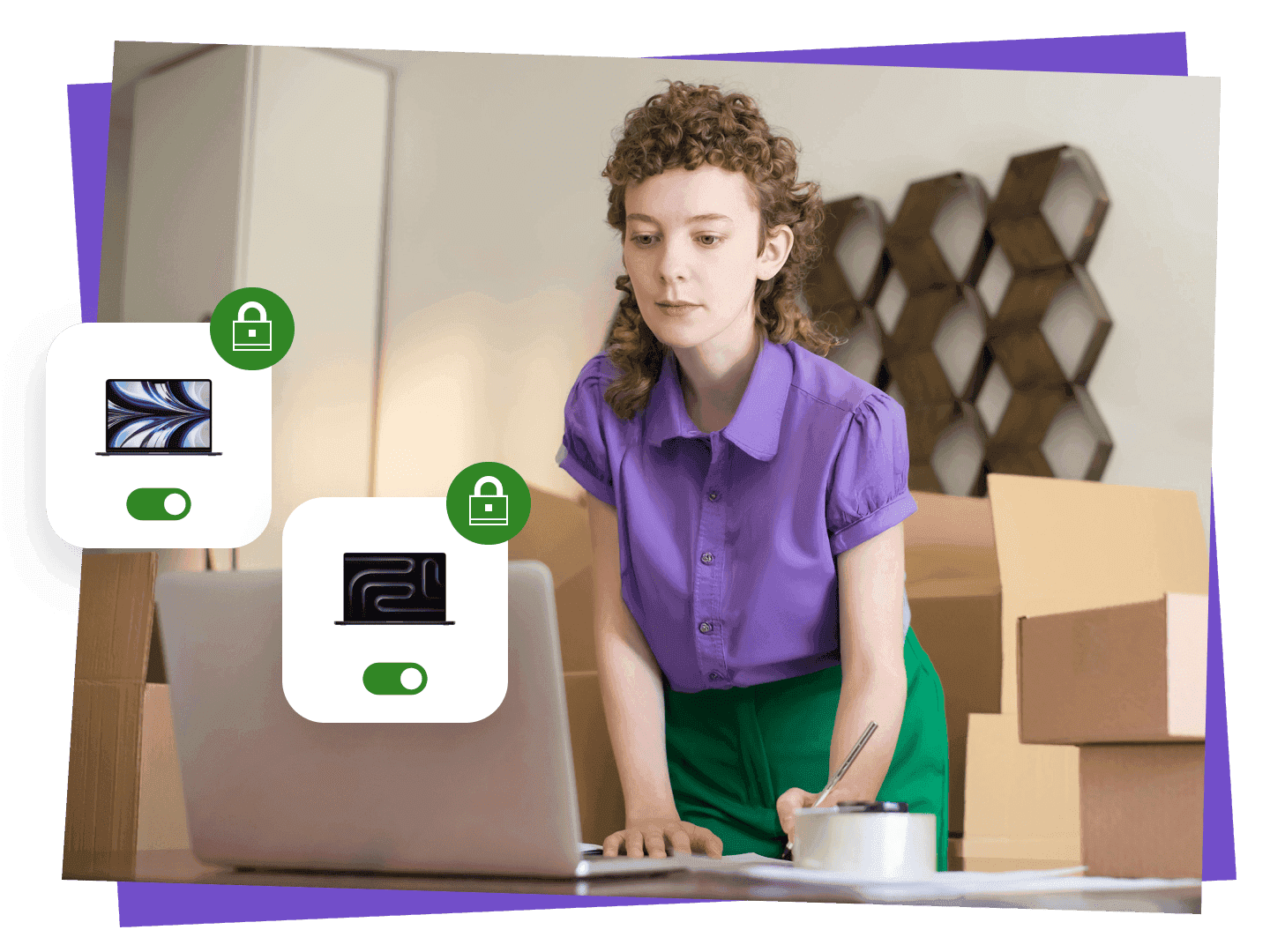
Table of Contents
Best endpoint security solutions: side-by-side comparison
1. Deel
2. CrowdStrike Falcon
3. SentinelOne Singularity
4. Microsoft Defender for Endpoint
5. Bitdefender GravityZone
6. Sophos Endpoint
7. Trend Micro Apex One
8. ESET PROTECT
Manage endpoint security with Deel IT
FAQ:
Deel IT provides centralized endpoint protection that integrates with existing security tools while also connecting device management, identity, and worker lifecycle workflows. CrowdStrike Falcon, Microsoft Defender for Endpoint, and SentinelOne also provide centralized endpoint security and integrations, but focus more specifically on security and threat response.
Endpoint protection helps businesses prevent, detect, and respond to threats across employee devices. But the right solution depends on more than malware protection: companies also need to consider their operating systems, security expertise, device management requirements, how endpoints are managed across distributed teams, and whether the platform integrates with the tools and workflows already in place.
This guide compares eight endpoint security solutions to help you decide which one is best suited for your company's needs.
The information in this article is based on publicly available vendor information at the time of writing. Features, integrations, pricing, availability, and product capabilities may change and can vary by plan, operating system, region, or configuration. Always check the provider’s latest documentation when evaluating endpoint protection software for your organization.
Best endpoint security solutions: side-by-side comparison
These platforms provide centralized endpoint security management and can connect with other security or IT tools, but their scope differs. Deel IT connects endpoint protection with device management and worker lifecycle operations, while dedicated security platforms focus more specifically on security monitoring, detection, and response.
| Platform | Centralized management | Verified integration examples | Best for |
|---|---|---|---|
| Deel IT | Endpoint protection alongside MDM, device workflows, application access, and lifecycle management in Deel IT | Microsoft Entra ID, Okta, Google Workspace, JumpCloud | Global teams that want endpoint security connected to broader IT operations |
| CrowdStrike Falcon | Falcon platform for endpoint security, detections, investigation, and response | Okta, Splunk, ServiceNow, Zscaler | Advanced endpoint detection and response |
| SentinelOne Singularity | Singularity Operations Center for alerts, assets, policies, investigation, and response | Okta, ServiceNow, Cloudflare, Microsoft | Automated threat detection and response |
| Microsoft Defender for Endpoint | Microsoft Defender portal for endpoint security, policies, alerts, investigation, and response | Microsoft Intune, Microsoft Sentinel, Microsoft Entra ID | Microsoft-centric organizations |
| Bitdefender GravityZone | GravityZone Control Center for centralized endpoint security configuration and management | Microsoft Sentinel, Splunk, Microsoft Active Directory, ConnectWise PSA | Small and mid-sized businesses |
| Sophos Endpoint | Sophos Central for endpoint protection policies and security management | Microsoft 365, Microsoft Entra ID, Okta, CrowdStrike Falcon | Organizations using the broader Sophos security ecosystem |
| Trend Micro Apex One | Apex Central for centralized policies, endpoint monitoring, logs, and security management | Splunk, IBM QRadar, third-party SIEM tools via syslog | Centrally managed endpoint protection |
| ESET PROTECT | ESET PROTECT Web Console for policies, tasks, endpoint status, detections, and response | Microsoft Sentinel, Splunk, IBM QRadar, ConnectWise Asio | Multi-OS endpoint security |
1. Deel
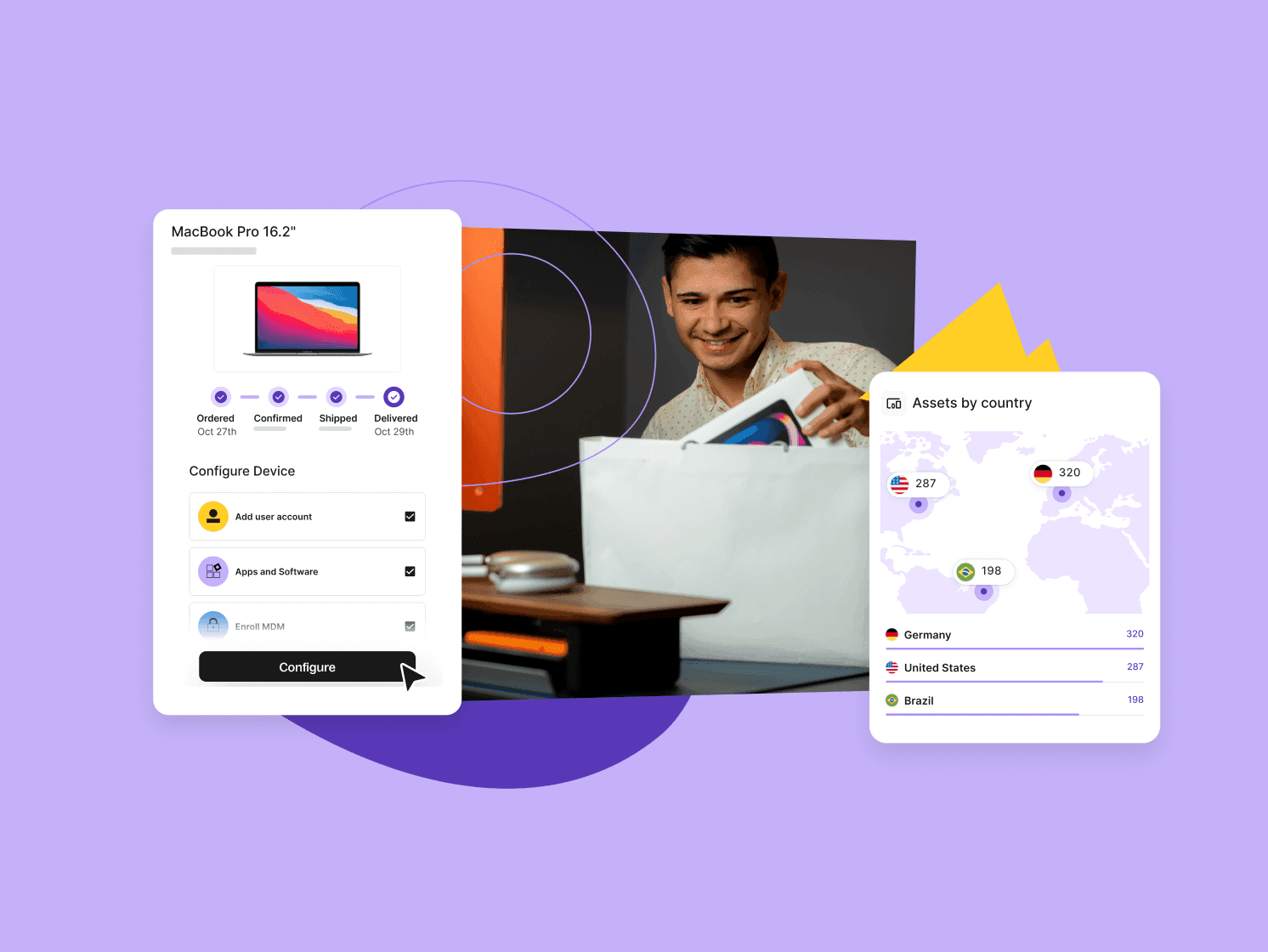
Deel IT combines endpoint protection with centralized device management and the tools needed to manage devices throughout the worker lifecycle. Teams can procure, deploy, secure, support, recover, and reuse devices across 130+ countries from one platform.
For distributed teams, this connects endpoint security with device management, application access, support, and offboarding rather than treating each as a separate process. Deel IT also integrates with HRIS and identity platforms, helping IT teams automate security and access workflows as workers join, change roles, and leave.
Key features:
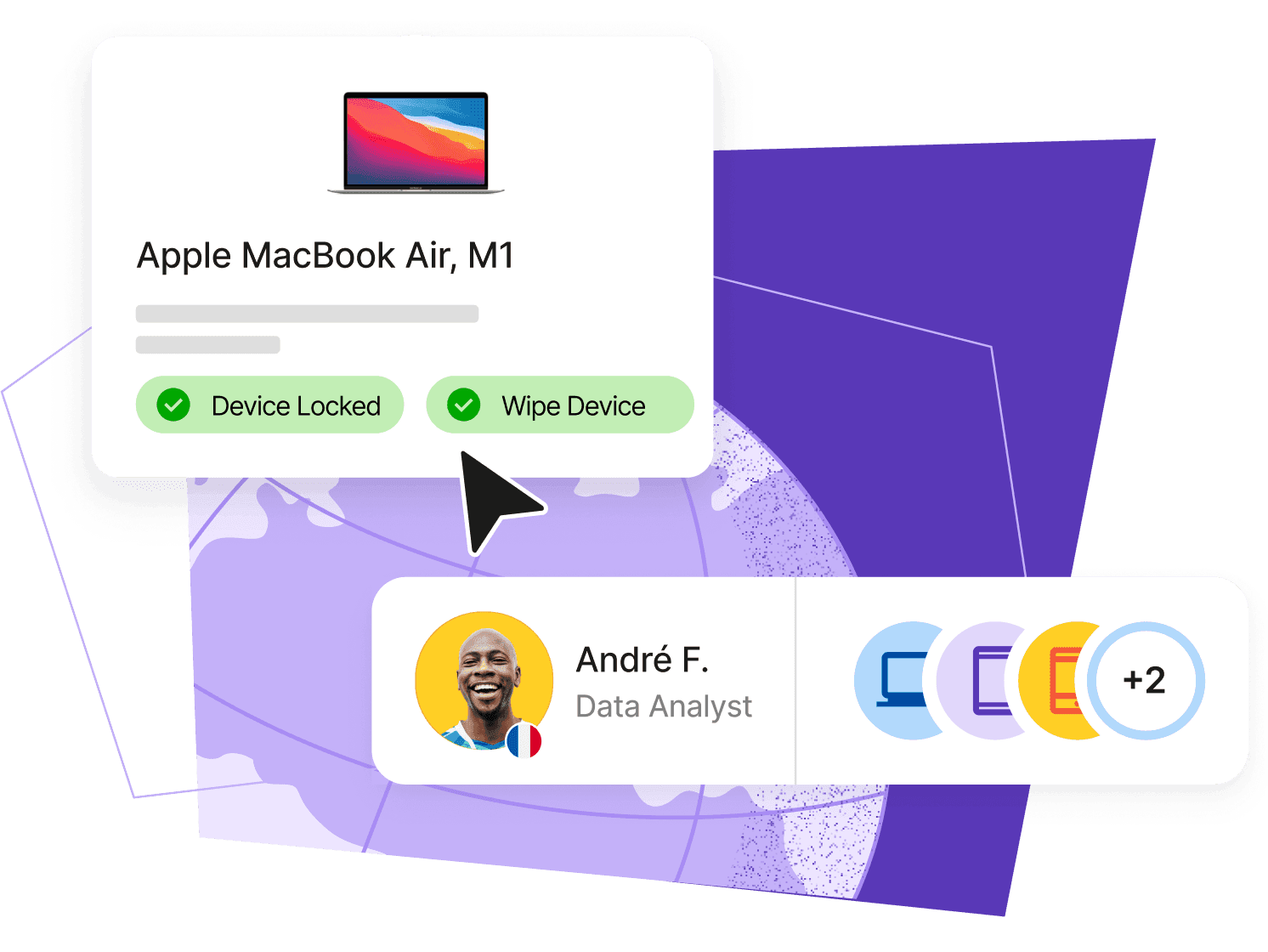
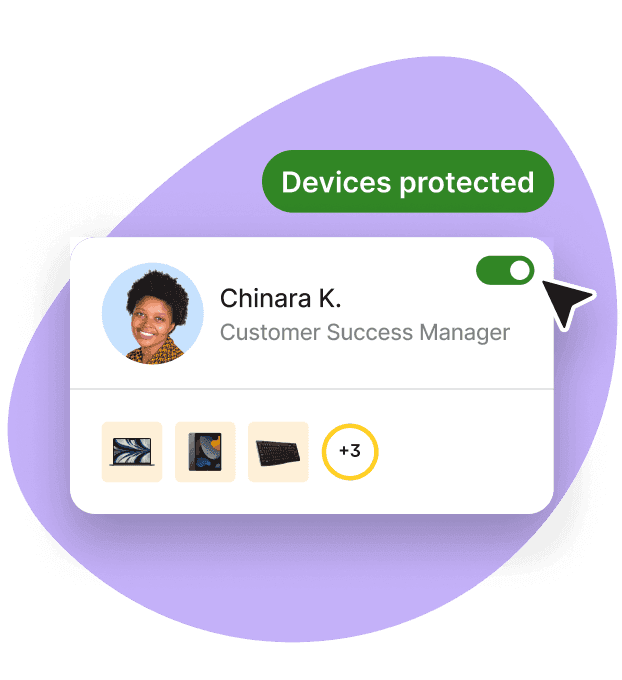
Built-in endpoint protection: Protect managed devices against endpoint threats with CrowdStrike-powered security integrated into the Deel IT environment.
Device management: Enroll and manage devices, apply security policies, and maintain centralized visibility across distributed fleets with mobile device management (MDM).
Global device lifecycle management: Procure, deploy, track, repair, recover, store, and reuse equipment across 130+ countries from a centralized platform.
Application access management: Provision and revoke application access based on worker lifecycle events, roles, and company policies.
HRIS and identity integrations: Connect with platforms such as BambooHR, Workday, HiBob, Okta, Google Workspace, and Microsoft Entra ID to keep IT workflows aligned with worker changes.
24/7 global IT support: Give distributed employees access to technical support across countries and time zones.
Secure offboarding and recovery: Coordinate access changes, device security, equipment collection, and recovery when workers leave.
Best for: Teams of all sizes, especially distributed and global organizations that want endpoint protection connected with centralized device management and their existing HR, identity, and security systems.
Considerations: Deel IT provides endpoint protection as part of a broader global IT operations platform. Organizations with specialized security operations may still need additional tooling for advanced threat investigation, threat hunting, XDR, or other specialist requirements.
Endpoint Protection
Built-in device protection from day one
2. CrowdStrike Falcon
CrowdStrike Falcon protects endpoints against malware and other security threats. It provides endpoint detection and response (EDR), threat intelligence, threat hunting, and tools for investigating and responding to incidents.
Falcon supports Windows, macOS, and Linux, with additional security products and managed services available separately.
Key features:
Endpoint protection and antivirus
Endpoint detection and response (EDR)
Threat intelligence and threat hunting
Investigation and remediation tools
Incident response capabilities
Managed detection and response options
Best for: Security teams that need advanced endpoint detection, threat hunting, and incident response.
Limitations: CrowdStrike focuses on endpoint security rather than broader device operations. Hardware procurement, global deployment, IT support, recovery, storage, and reuse require separate tools or providers.
3. SentinelOne Singularity
SentinelOne Singularity protects endpoints against malware, ransomware, and other threats. It provides endpoint detection and response (EDR), behavioral threat detection, investigation tools, and automated response actions.
It can isolate affected endpoints, remediate threats, and roll back some unauthorized changes on supported devices.
Key features:
Endpoint threat prevention and detection
Endpoint detection and response (EDR)
Automated response actions
Ransomware protection and rollback
Threat investigation
XDR options
Best for: Security teams that want to automate endpoint threat detection, response, and remediation.
Limitations: SentinelOne focuses on endpoint security and threat response rather than broader device operations. Device procurement, global deployment, IT support, recovery, storage, and reuse require separate tools or providers.
4. Microsoft Defender for Endpoint
Microsoft Defender for Endpoint protects devices against malware and other endpoint threats. It provides antivirus, endpoint detection and response (EDR), threat analysis, vulnerability management, and tools for investigating and responding to security incidents.
It supports Windows, macOS, Linux, Android, and iOS and integrates with Microsoft tools such as Intune and other Microsoft Defender products.
Key features:
Antivirus and endpoint threat protection
Endpoint detection and response (EDR)
Investigation and response tools
Vulnerability management
Threat analytics
Integration with Microsoft security and device management tools
Best for: Organizations already using Microsoft security and device management tools.
Limitations: Capabilities vary by operating system and license, and the platform is closely tied to the wider Microsoft ecosystem. Device procurement, global logistics, hardware support, and recovery require separate tools or providers.
5. Bitdefender GravityZone
Bitdefender GravityZone protects endpoints against malware, ransomware, and other threats. It also provides centralized security policies, risk management, and network attack protection.
Organizations can add capabilities such as EDR, XDR, and patch management depending on the GravityZone product or package they use.
Key features:
Antivirus, anti-malware, and ransomware protection
Endpoint security policies
Network attack protection
Risk management
EDR and XDR options
Patch management options
Best for: Small and mid-sized businesses that need centralized malware and ransomware protection.
Limitations: Some capabilities require different GravityZone products, packages, or add-ons. Device procurement, global deployment, IT support, recovery, and reuse are outside its core scope.
6. Sophos Endpoint
Sophos Endpoint protects devices against malware, ransomware, exploits, and web threats. It detects ransomware activity and protects files from unauthorized encryption.
It also provides web and application controls, behavioral detection, and centralized management. Organizations can add EDR or XDR capabilities for threat investigation and response.
Key features:
Malware and ransomware protection
Ransomware detection and file protection
Exploit and behavioral protection
Web and application controls
Centralized endpoint management
EDR and XDR options
Best for: Organizations focused on ransomware protection and endpoint security controls.
Limitations: Advanced detection and response capabilities may require additional Sophos offerings. Device procurement, global deployment, hardware support, recovery, and reuse require separate tools or providers.
7. Trend Micro Apex One
Trend Micro Apex One protects endpoints against malware and other threats using malware scanning, behavior monitoring, and machine learning. It also provides web security, application controls, and device controls.
Organizations can use additional Trend Micro capabilities for endpoint investigation, vulnerability protection, and broader threat detection and response.
Key features:
Malware and threat protection
Behavior monitoring
Machine learning-based detection
Web and device controls
Application control
Endpoint investigation options
Best for: Organizations that need endpoint protection across cloud and on-premises environments.
Limitations: Some security capabilities require additional Trend Micro products or licensing. Device procurement, global deployment, IT support, recovery, and reuse require separate tools or providers.
8. ESET PROTECT
ESET PROTECT protects endpoints against malware, ransomware, and other threats. It provides centralized security management and supports Windows, macOS, Linux, and mobile devices, with available capabilities depending on the ESET PROTECT subscription.
Organizations can add capabilities such as encryption, cloud application protection, EDR, and XDR through different ESET products and subscription tiers.
Key features:
Antivirus and anti-malware protection
Ransomware protection
Device control
Endpoint security management
Encryption options
EDR and XDR options
Best for: Organizations managing endpoint security across multiple operating systems.
Limitations: Available capabilities depend on the ESET PROTECT subscription and products selected. Device procurement, global logistics, IT support, recovery, storage, and reuse are outside its core scope.
Case study
Room Price Genie, a hotel technology company that grew from 15 to 160 employees, needed better visibility and control over devices as its team expanded globally. After adopting Deel IT, the company centralized device tracking and MDM enrollment records and automated offboarding workflows, giving its team a single place to verify device enrollment, returns, and other information needed to support security and compliance. The automated equipment workflow also saves its People Operations team an estimated 10–15 minutes per hire.
Deel exceeded our expectations by delivering equipment to challenging regions. Their ability to match our speed and flexibility has made them an integral part of our operations
— Claudia Korenko,
People Ops Manager at Sastrify
Manage endpoint security with Deel IT
Endpoint protection is only one part of managing a secure global device fleet. IT teams also need to deploy and manage devices, control application access, support employees, connect existing HR and identity systems, and securely recover equipment when workers leave.
Deel IT brings these workflows into one centralized platform, connecting endpoint security with device management, access, support, and the worker lifecycle.
With Deel IT, you can:
Deploy devices globally: Procure, configure, and deliver equipment to employees across 130+ countries.
Manage devices centrally: Enroll devices with MDM, apply security policies, and maintain visibility across distributed fleets.
Protect managed endpoints: Use built-in, CrowdStrike-powered endpoint protection to help secure employee devices against threats.
Control application access: Provision and revoke access based on employee roles, company policies, and worker lifecycle events.
Connect HR and identity tools: Integrate with systems such as BambooHR, Workday, HiBob, Okta, Google Workspace, and Microsoft Entra ID to keep IT workflows aligned with worker changes.
Automate onboarding and offboarding: Trigger device and access workflows as employees join, change roles, or leave.
Manage the device lifecycle: Track, repair, recover, store, and reuse equipment instead of managing each stage through separate processes.
Support distributed employees: Give workers access to 24/7 IT support across locations and time zones.
Book a demo to see how Deel IT can help you manage endpoint security and global IT operations from one platform.
FAQ:
What endpoint protection software integrates with existing security tools?
Deel IT combines centralized endpoint protection with integrations across identity, HR, and IT workflows, helping teams connect security with the systems they already use. Dedicated security platforms such as CrowdStrike Falcon, Microsoft Defender for Endpoint, and SentinelOne also integrate with broader security ecosystems and are designed for more specialized threat detection and response.
Can endpoint protection software provide centralized management across distributed devices?
Yes. Platforms such as Deel IT, CrowdStrike Falcon, Microsoft Defender for Endpoint, Bitdefender GravityZone, and ESET PROTECT provide centralized tools for managing endpoint security across distributed devices. Deel IT also connects endpoint protection with device management, application access, support, and hardware lifecycle workflows.
Does Deel IT replace dedicated security platforms like CrowdStrike or SentinelOne?
Deel IT takes a broader approach than a standalone endpoint security platform. It combines endpoint protection with device management and global IT operations, while organizations with advanced security operations may use additional specialist tools for capabilities such as threat hunting, investigation, or XDR.
What should global teams look for in endpoint protection software?
Look for centralized management, support for your operating systems, integrations with existing identity and security tools, policy enforcement, threat detection and response, and remote security controls. Global teams should also consider how endpoint security connects with device deployment, support, access management, and offboarding.
How does centralized endpoint management help remote IT teams?
Centralized management gives IT teams one place to monitor endpoints, apply security policies, investigate issues, and take remote actions regardless of employee location. It also helps organizations apply security requirements more consistently across a distributed device fleet.
Which platforms combine endpoint protection with device lifecycle management?
Deel IT combines endpoint protection with device procurement, deployment, management, support, recovery, storage, and reuse across 130+ countries. Dedicated security platforms such as CrowdStrike Falcon, SentinelOne, and Microsoft Defender for Endpoint focus more specifically on endpoint security, so organizations typically manage physical device logistics and lifecycle operations separately.
Michał Kowalewski a writer and content manager with 7+ years of experience in digital marketing. He spent most of his professional career working in startups and tech industry. He's a big proponent of remote work considering it not just a professional preference but a lifestyle that enhances productivity and fosters a flexible work environment. He enjoys tackling topics of venture capital, equity, and startup finance.